After getting feedback on my lesson plan, I had two main questions. First, I wanted to know whether using an infographic was actually a meaningful learning tool or just a fun way for students to present information. Second, I wanted to think more about how I could structure the group work so that every student was actually contributing.
The first article helped me feel more confident about the infographic piece. Alkady, Ismael, and Albassuny (2022) studied the use of infographic-based educational modules with elementary students and found statistically significant improvement between students’ pre- and post-assessments. While their study was not specifically about Canva or social studies, it supported my decision to keep the infographic as part of the lesson instead of replacing it with a more traditional product.
My second article helped answer my question about group participation. Consunji (2025) examined cooperative learning practices in elementary classrooms and emphasized individual accountability as an important part of successful group work. The study specifically discussed assigning students roles such as recorder, reporter, timekeeper, and materials manager so that each student has a clear responsibility.
Based on both articles, I plan to keep the Canva infographic but add clearer group roles. Research helped me move from simply thinking, “That sounds like a good idea,” to having a stronger reason for why I am making those choices.
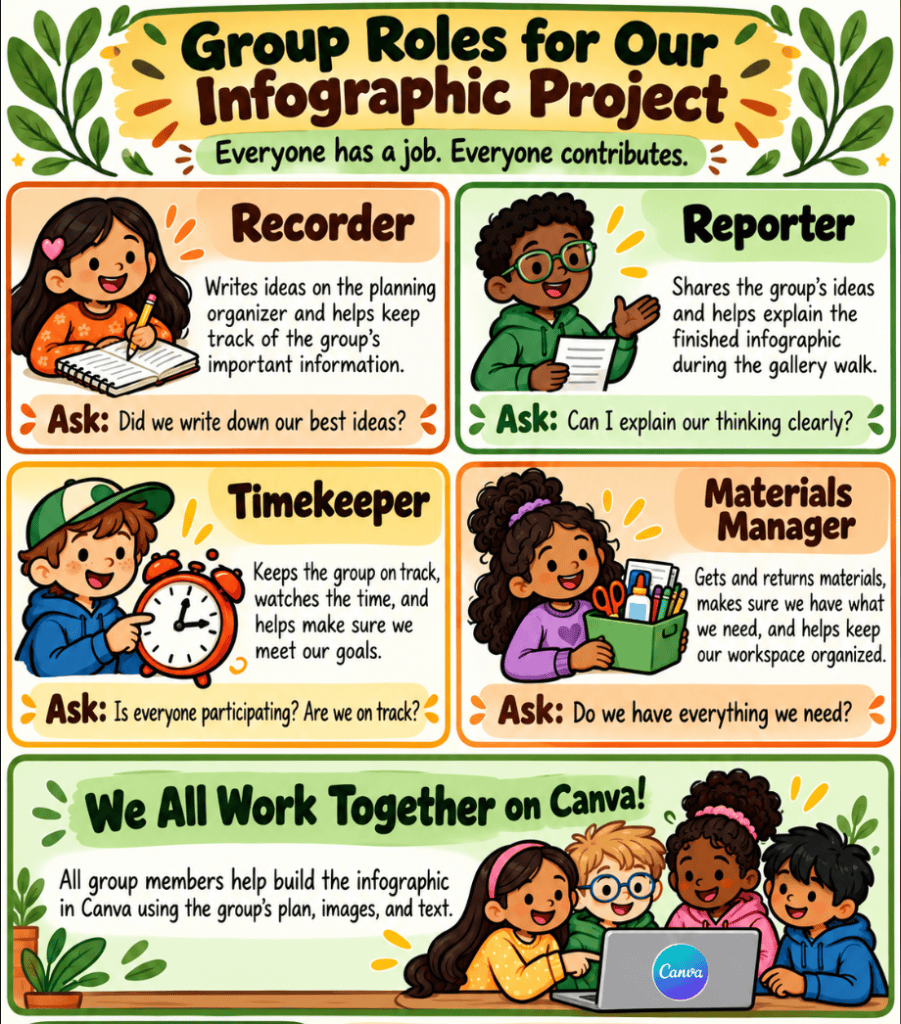
Figure 1. Group roles for the infographic project, designed to give each student a clear responsibility while still keeping the Canva creation collaborative.
References
Alkady, H., Ismael, G., & Albassuny, A. (2022). The effect of an educational program using educational models with infographic technology on elementary school skill performance.
Consunji, J. V. (2025). Cooperative learning practices of Grade One teachers in select elementary schools in Region III. Psych Educ, 49(1), 18–45


Leave a Reply