One of my favorite parts of teaching is watching students realize that something they were completely sure about is not quite right. Those moments are not failures. They are often where the most meaningful learning begins.
This week, while reading Bransford et al. (2000), I kept thinking about how strongly prior knowledge shapes the way we interpret new experiences. For this essay, I chose to explore the relationship between learning, understanding, and conceptual change. My thinking was shaped by a story from my time teaching third grade in Arizona, when a student visiting California asked his family a seemingly silly question. However, it made perfect sense based on the experiences he had already had. The story reminds me how strongly prior knowledge influences the way we interpret something new.
I also connected this idea to Leo Lionni’s Fish Is Fish, a mentor text I already love using with students. The fish can only imagine the world outside the water through the experiences he already understands.
These ideas are especially relevant in my current classroom as my fifth graders explore circuits and coding through Makey Makey and Microsoft MakeCode Arcade. Makey Makey allows students to turn everyday conductive materials into computer inputs, while MakeCode Arcade gives them opportunities to build and test their own coded games.
Together, these experiences have pushed me to think beyond whether students can produce the correct answer. I am more interested in what they believed beforehand, what challenged that belief, and whether they are willing to revise their thinking. That process is at the heart of my essay, Learning, Understanding, and Conceptual Change.
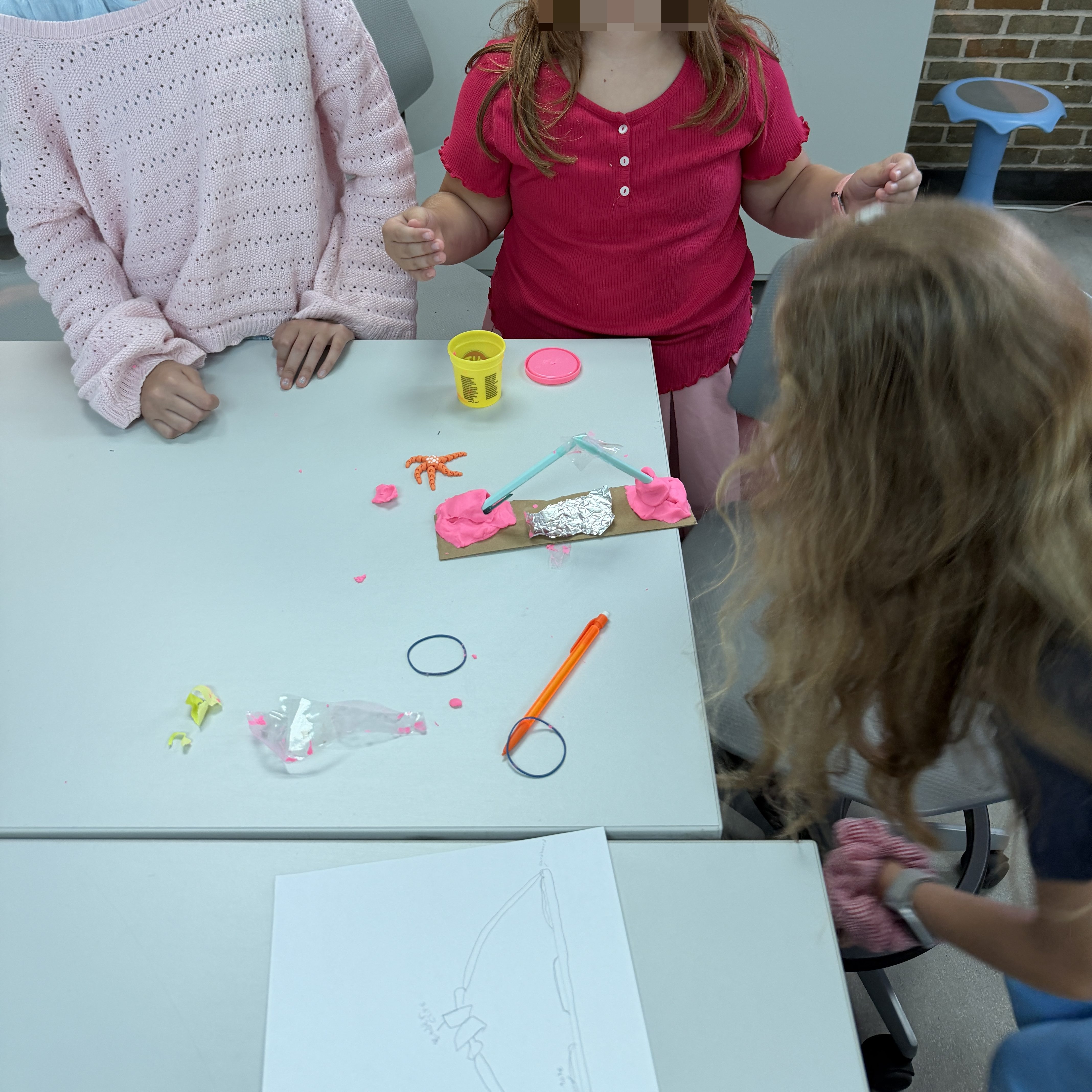
Figure 1. Students test their predictions about which materials are conductive during a Makey Makey investigation.
References
Bransford, J., Brown, A.L. & Cocking, R. R. (2000). How people learn: Brain, mind, experience and school. National Academy Press.


Leave a comment