One of my favorite parts of teaching is seeing a great idea and wondering, “How could this work for my students?” For this project, I challenged myself to adapt an innovative high school biology lesson into something meaningful for my third graders. Rather than just simplifying the content, I wanted to preserve what made the original lesson engaging while redesigning it for a completely different age group. The result was a hands-on lesson using Makey Makey, Scratch, and Play-Doh to help students explore camouflage and animal adaptations.
The Inspiration
My inspiration came from a lesson created by colleague who teaches High School Biology, Rocky Overholt.
View Rocky’s lesson here: Innovative Lesson Plan
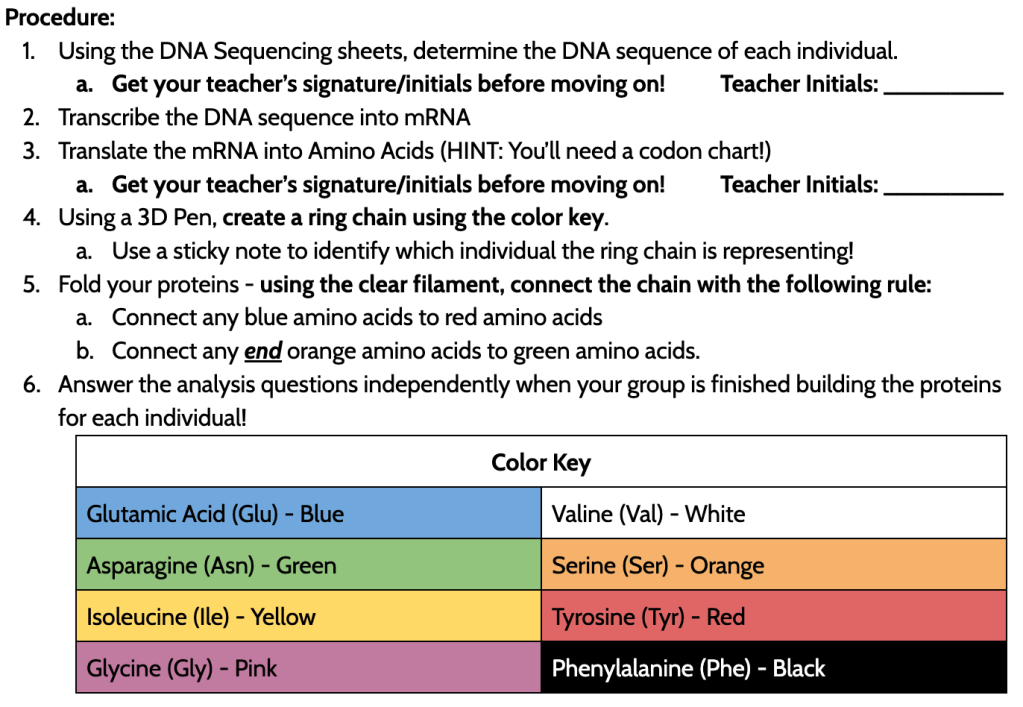
Figure 1. Screenshot from Rocky Overholt’s Innovative Lesson Plan illustrating the original protein-modeling procedure using a 3D pen. Image reproduced from the author’s publicly shared lesson for purposes of commentary and educational discussion. Used with attribution.
Her innovative high school biology lesson explores DNA, protein synthesis, and cystic fibrosis through hands-on modeling with a 3D pen. Rather than relying on diagrams or textbook images, students physically build proteins to investigate how changes in DNA affect protein structure and function. What impressed me most was not the biology content, but the instructional design. The technology wasn’t simply added for engagement. It made an invisible scientific process visible through creation, collaboration, and discussion.
My first instinct was to ask, “How can I bring DNA sequencing to third grade?” The more I brainstormed, the more forced every idea became. Eventually, I realized I was trying to adapt Rocky’s content instead of her teaching approach. What inspired me wasn’t DNA or cystic fibrosis. It was the way students built physical models, used technology to make abstract ideas visible, compared two outcomes, and learned by creating. Once I shifted my thinking, I stopped asking how to teach DNA and started asking how those same instructional ideas could support concepts my own students already learn.
The Adaptation
I immediately thought of one of my favorite third-grade EL Education science units, Adaptations and the Wide World of Frogs. Animal adaptations and camouflage provided the perfect context for applying Rocky’s instructional approach. Students identify a frog and its habitat before constructing two Play-Doh models: one with effective camouflage and one with poor camouflage.
View my lesson here: Camouflage Counts: How Colorful Changes Help Frogs Survive
Video 1. Prototype of my adapted lesson using Makey Makey, Scratch, and Play-Doh frog models to demonstrate camouflage and animal adaptations. Background image: Leaf Texture 04 by Jacob Gube (2009), used under the Creative Commons Attribution-ShareAlike 2.0 (CC BY-SA 2.0) license.
After learning Makey Makey and Scratch in previous lessons, they connect their frog models to a simple Scratch program using Makey Makey. Students touch each model to predict which frog is more likely to survive before receiving immediate feedback through Scratch. Combining physical models with interactive technology allows students to test their thinking and explain how camouflage affects survival. Instead of simply reading about animal adaptations or completing a worksheet, students actively build, test, and explain their understanding.
The comparison below shows how I adapted Rocky’s instructional design rather than her content.
| Rocky’s Lesson | My Adaptation |
| High school Biology | 3rd Grade Science |
| DNA mutations | Animal adaptations |
| 3D Pen | Play-Doh & Makey Makey |
| Protein modeling | Frog camouflage |
| Cystic fibrosis | Predator-prey survival |
| Physical model + technology | Physical model + technology |
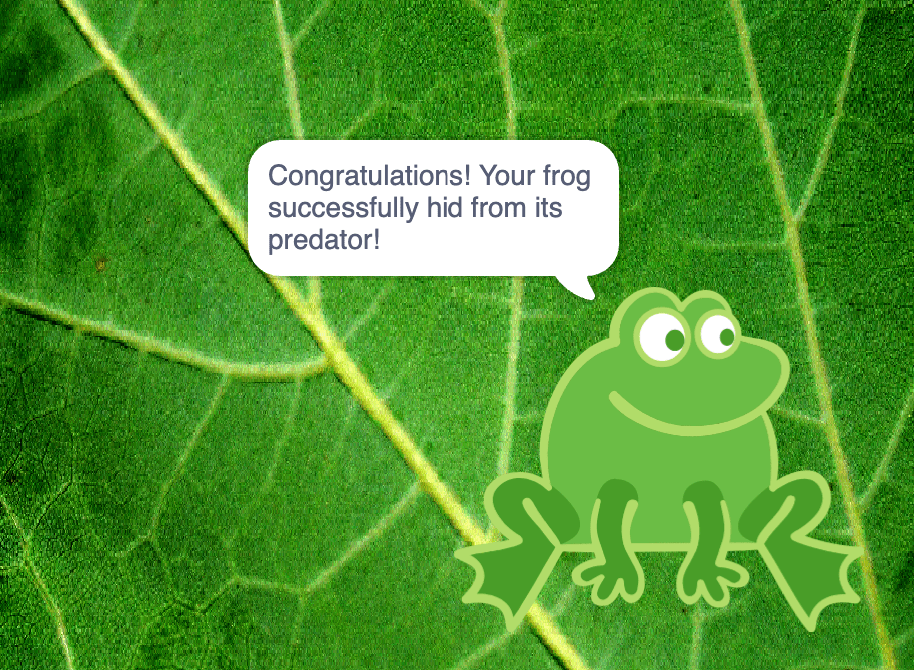
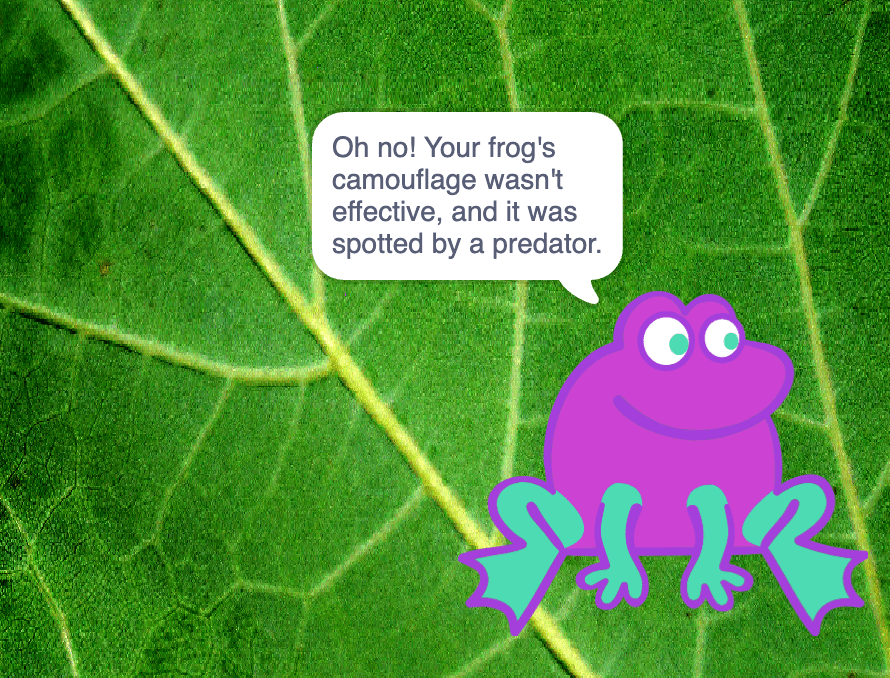
Figure 2. Screenshots from my original Scratch program demonstrating effective and ineffective frog camouflage. Background image: Jacob Gube, Leaf Texture 04 (2009), CC BY-SA 2.0.
Although the content changed completely, the instructional philosophy remained the same.
The Takeaway
This project challenged me in ways I did not expect. More than anything, it made me reflect on how I have used other educators’ work throughout my teaching career. I often operated under the assumption that if I was using something only with my students, attribution was optional. This week showed me that ethical use is about much more than avoiding plagiarism. It is about recognizing the creativity and effort behind someone else’s work and giving them the credit they deserve.
This project also changed how I think about adaptation. I used to think adapting meant simplifying someone else’s lesson. Instead, I learned it means preserving the instructional design while reimagining the experience for a different audience. Innovation does not always mean starting from scratch. Sometimes it begins by recognizing an excellent idea, giving credit to its creator, and thoughtfully adapting it for a new group of learners.
References
Gube, J. (2009, June 5). Leaf Texture 04 [Photograph]. Flickr. https://www.flickr.com/photos/31288116@N02/3598011262. Licensed under Creative Commons Attribution-ShareAlike 2.0 International (CC BY-SA 2.0).
Overholt, R. (2026). Innovative Lesson Plan. Retrieved from: https://docs.google.com/document/d/1hSA705ed9Fa3F59GO2cy114geKkGngHNTubZ8hB5uKg/edit?usp=sharing


Leave a Reply