Every teacher is a builder. We build lessons, classrooms, relationships, and opportunities. But this week I realized something I had not considered before. If I spend all my energy designing something amazing without considering who can actually build alongside me, have I really designed an innovative learning experience? That’s when I landed on the phrase Building Without Barriers. It captures my goal as an educator: to construct meaningful learning experiences that are accessible to all.
Laying the Foundation
I have been enamored with constructionism since it was introduced to me during my first semester of this program. Simply put, constructionism suggests that learning happens most powerfully when people create something meaningful. Whether it’s a model, a story, a game, or a project, the act of making helps learners build deeper understanding (Ackermann, 2001). The notion that learners can take charge of their own learning by creating lit the inferno of my imagination (Ackermann, 2001).
Makey Makey is just one small step in that direction. By itself, it does nothing. It is simply a vessel for creativity and construction. It allows learners to connect, literally and figuratively, while constructing their own understanding. I loved this philosophy until I realized it quietly assumes everyone can participate equally.
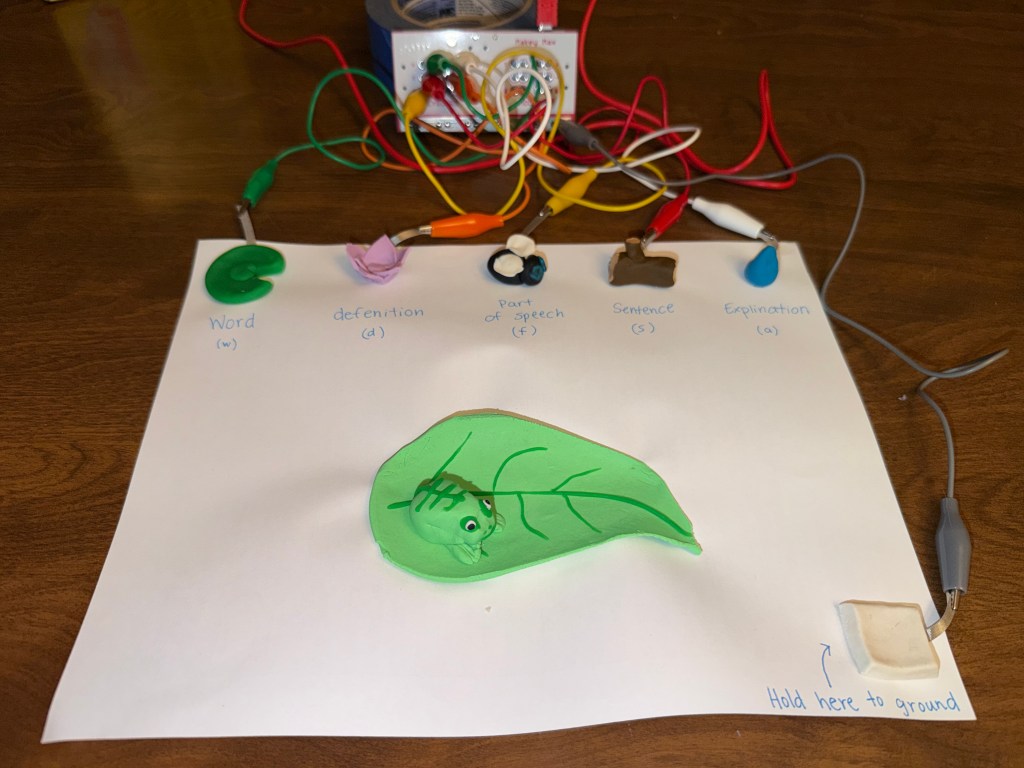
Figure 1. Prototype of the Sculpting Meaning interactive vocabulary gallery using Makey Makey.
Removing the Barriers
Constructionism asks students to build. Universal Design for Learning (UDL) asks teachers to remove barriers to building (CAST, n.d.). It’s almost like the OSHA of the classroom.
The CAST UDL Guidelines challenged me to think less about adding accommodations after a lesson is created and more about designing flexible learning experiences from the very beginning. This means considering multiple means of engagement, representation, and action and expression (CAST, n.d.).
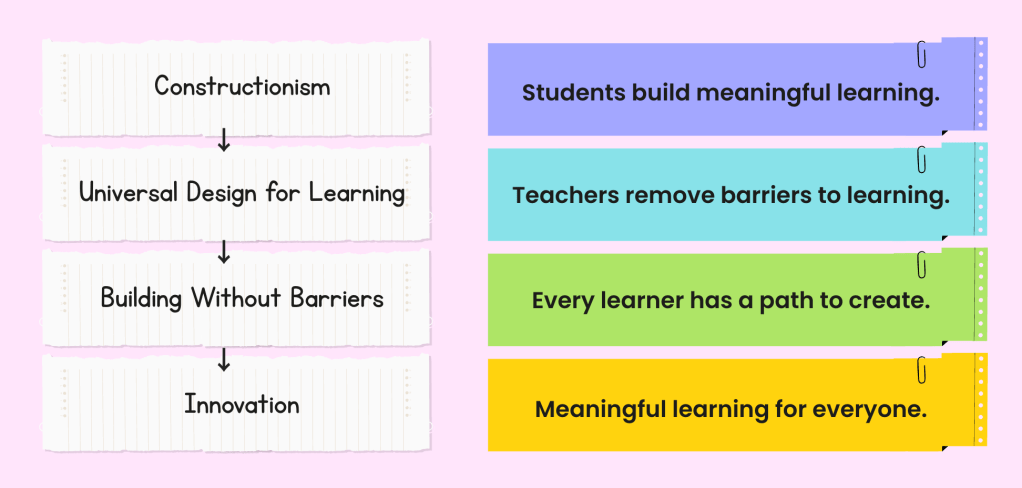
Figure 2. My connection between constructionism, Universal Design for Learning, and innovation.
In practice, this looks like questioning whether students should work independently, with a partner, or in small groups. It means embedding tools such as text-to-speech for students who need or benefit from another way to access information. It means providing visual examples so students understand the end goal while offering meaningful choices in how they complete the task. Not lowering expectations, but simply acknowledging that students may need different pathways to reach the same destination.
Inspecting the Blueprint
This week left me wrestling with some uncomfortable questions.
- Have I confused fairness with sameness?
- Is giving everyone the exact same experience actually equitable?
- Am I unintentionally designing for students who learn like I do?
- Is the technology becoming the focus instead of the learning?
Looking back at lessons I have taught in the past, I can recognize gaps that I unintentionally filled with assumptions and barriers that I unintentionally built. I do not have all the answers yet, but these questions have already begun changing the way I approach lesson planning. Designing an engaging activity is not enough if only some of my students can fully participate in it.
I keep coming back to something I notice every year in third grade. We often assume students know how to use technology simply because they have grown up around it. But access is more than having a Chromebook. It is having the knowledge, confidence, and support to use it successfully. That realization has challenged me to think beyond whether students have technology and instead consider whether they truly have access to learning through it.
Cutting the Ribbon
Constructionism: Build something meaningful.
UDL: Make sure everyone has a path to build it.
Together, those ideas have changed the way I think about innovation. I used to believe innovative teaching meant finding exciting technology or creating the next “wow” lesson. Now I see innovation differently. It is designing learning experiences where every student has the opportunity to create, contribute, and succeed.
Innovation does not begin with a new piece of technology. It begins when every learner has the opportunity to create something meaningful. If one student is left watching while everyone else builds, the barrier is not the learner. It’s my design.
As I continue through this course, I hope to spend less time asking, “What can this technology do?” and more time asking, “Who might this design leave behind, and how can I change it?” To me, that is what it means to build without barriers.
References
Ackermann, E. (2001). Piaget’s constructivism, Papert’s constructionism: What’s the difference? MIT Media Lab. https://learning.media.mit.edu/content/publications/EA.Piaget%20_%20Papert.pdf
CAST. (n.d.). Universal Design for Learning guidelines version 3.0. https://udlguidelines.cast.org/


Leave a comment