When I first read that I would spend ten hours “playing” with a new technology, I was not entirely sure what that would look like. Like many teachers, I am used to approaching technology with a lesson plan already in mind. Instead, this assignment asked me to explore first and plan later. After researching several options (and briefly convincing myself I needed a 3D printer), I landed on Makey Makey. What I expected to be an introduction to a new classroom tool quickly became a reminder that meaningful innovation is not about the newest technology. It is about curiosity, thoughtful design, and creating opportunities for students to explore.
Innovation Starts with Play
Learning through curiosity is at the heart of Makey Makey. When I opened the box, I immediately searched my craft room for materials to experiment with and landed on pipe cleaners.
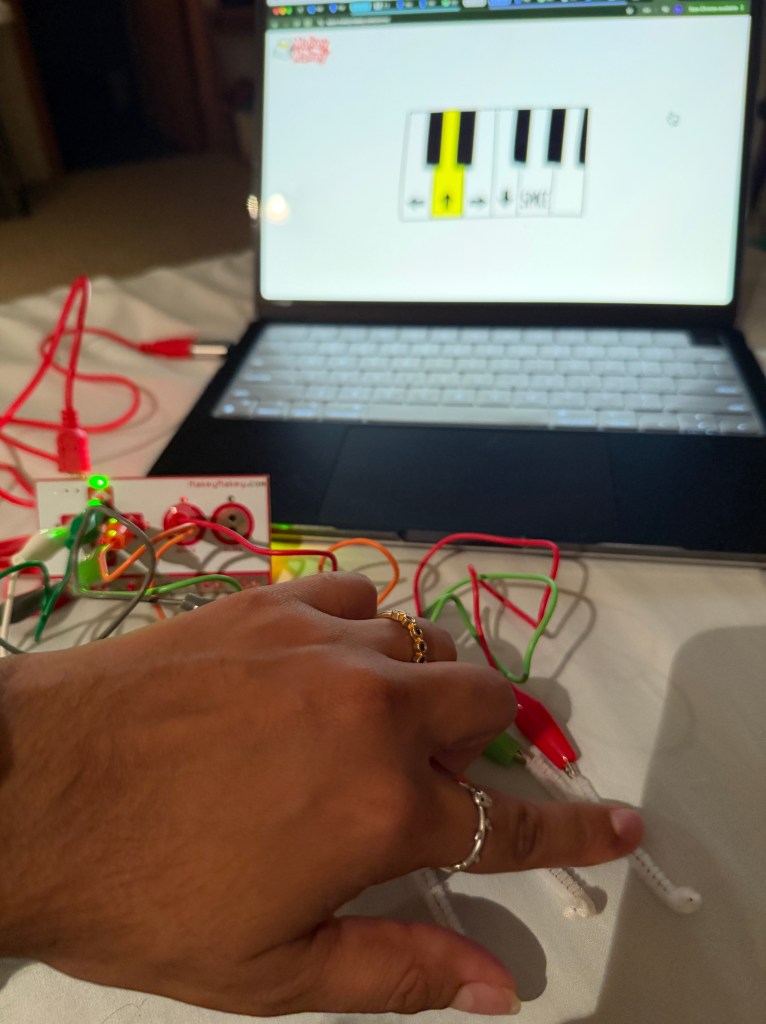
Figure 1. Initial conductivity testing using pipe cleaners.
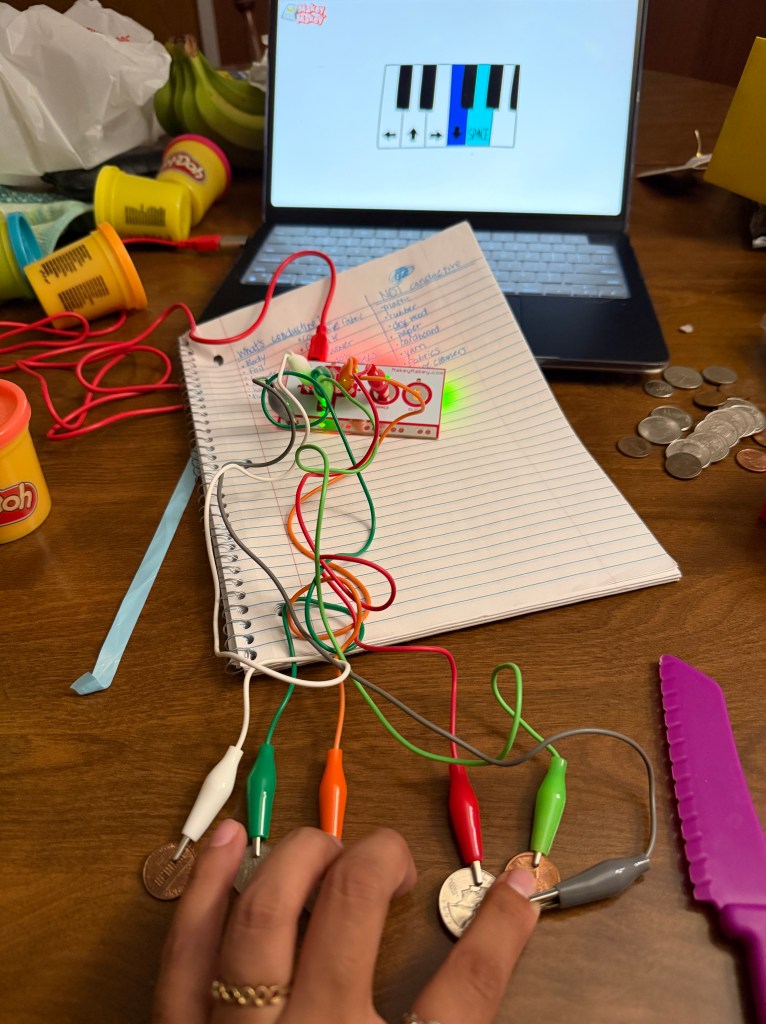
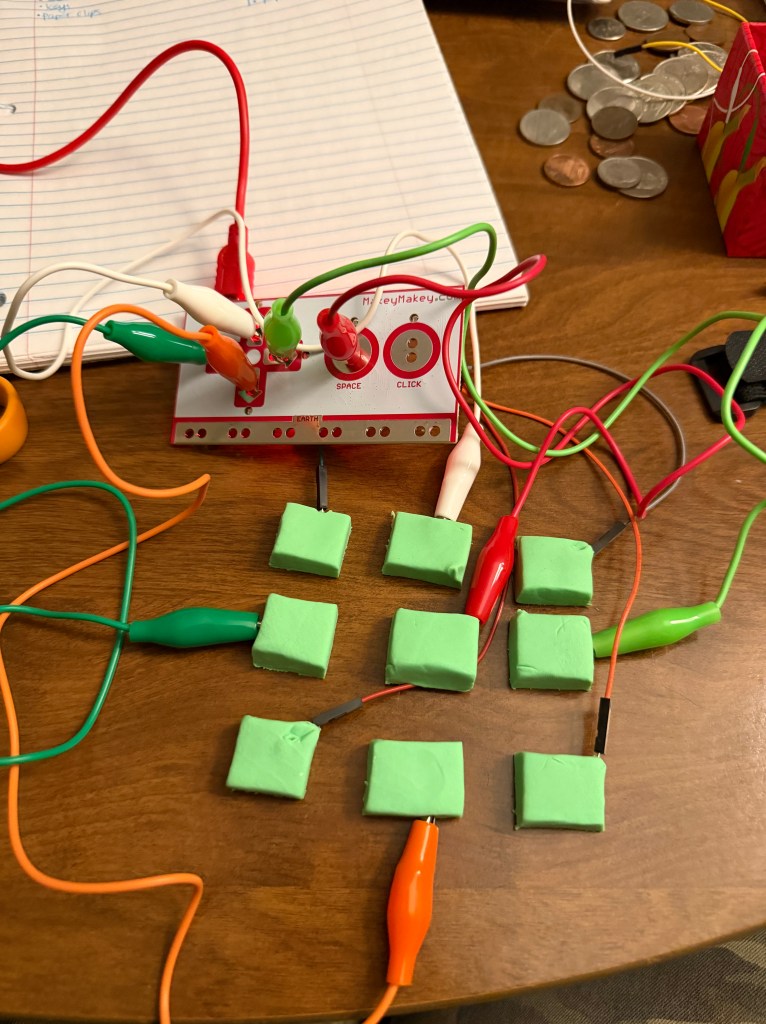
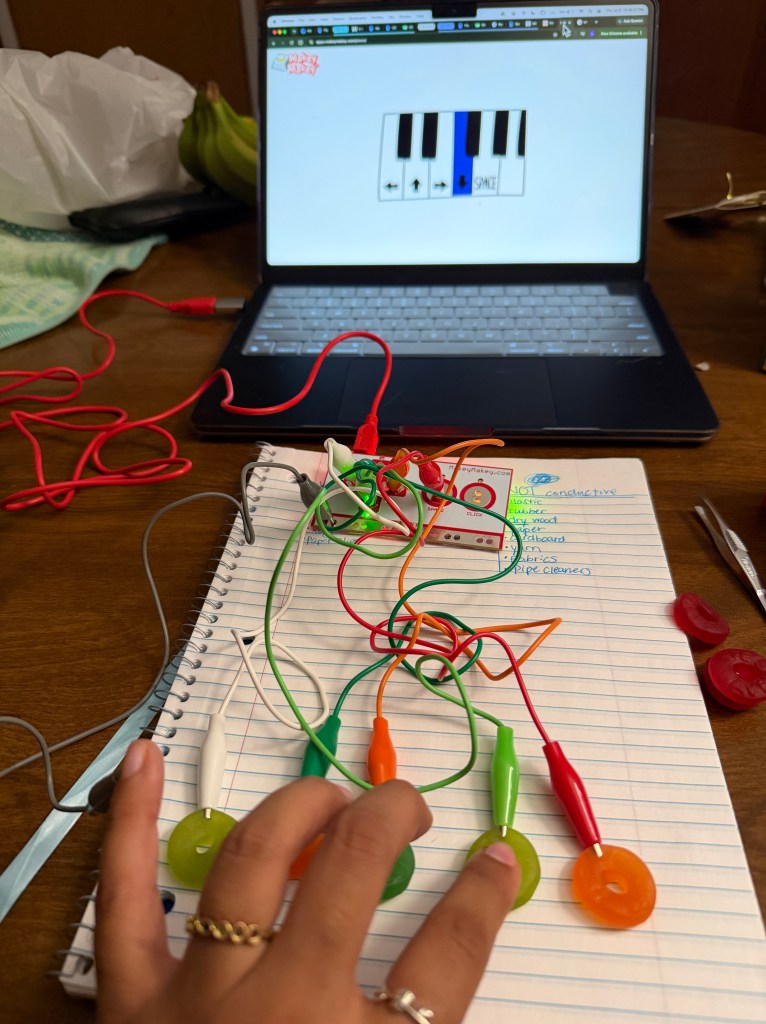
They seemed like the perfect third-grade material, but I quickly learned that the fuzzy coating is not conductive. While I could clip directly to the wire inside, the results were inconsistent, so I eventually traded pipe cleaners for fruit, candy, and Play-Doh. Suddenly, everything clicked.
Along the way I faced challenges with grounding, organizing wires, and figuring out which materials worked best. My favorite discovery was realizing my earring made an excellent ground connection when I didn’t want to keep an alligator clip attached to my hand.
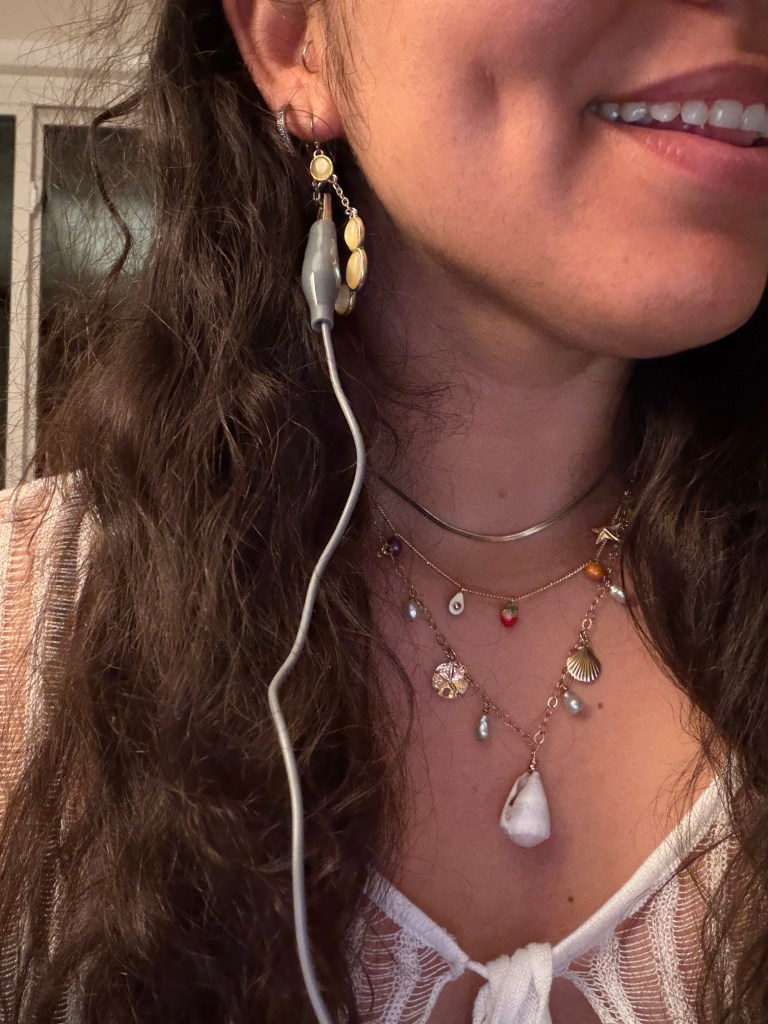
Figure 2. An unexpected discovery: using my earring as a reliable ground connection while experimenting with Makey Makey.
When I couldn’t figure out how to use one of the buttons from my Craft & Code kit, I found myself searching forums and eventually asking the Makey Makey Reddit community for help. It reminded me that innovation rarely happens in isolation. Looking back, I realized I was learning exactly the way I hope my students learn: experimenting, making mistakes, asking questions, and trying again. It also made me wonder how often I unintentionally remove those opportunities by trying to make learning too efficient. Some of my biggest learning moments came from troubleshooting, not succeeding on the first try.
Good Teaching Matters More Than Good Technology
One realization kept resurfacing throughout my exploration: Makey Makey doesn’t teach anything on its own. If I simply handed the kit to my third graders, most wouldn’t know where to begin. What transforms it into meaningful learning is thoughtful instructional design. Bates (2015) argues that technology should be selected to support learning goals rather than because it is new or exciting. As I explored, I found myself naturally thinking through many parts of the SECTIONS model, especially interaction, ease of use, and teaching. Instead of asking, Can I use this? I started asking, Should I use this, and why?
The multimedia design principles discussed by Bates (2015) also became much more meaningful through experience. Instead of trying every possibility at once, I naturally learned by focusing on one material, one connection, and one idea before moving on to something more complex. My thinking also shifted. Instead of asking, How can I use Makey Makey? I began asking, What experiences do I want my students to have because of Makey Makey? That question feels much more important. If experimenting and troubleshooting were the moments that taught me the most, shouldn’t those become the focus of my lessons instead of simply teaching students how to use the device?
Innovation Depends on Access
The Systems of Power reflection challenged me to think about factors I normally take for granted. I had my own laptop, reliable internet (aside from a storm-related outage), a comfortable space to work, prior experience with Scratch and micro:bit, and enough financial flexibility to purchase a couple of Makey Makey booster kits and additional materials.
Videos 1-3. Early exploration with Makey Makey as I experimented with different conductive materials. These small moments of testing, troubleshooting, and discovery helped build my understanding of the technology and reinforced the value of learning through play.
Would everyone else have had the same experience? Definitely not.
Before this reflection, I mostly thought about access in terms of cost. Now I realize it also includes prior experience, reliable internet, available time, and having a safe place to experiment. Without those supports, my experience would have looked very different. Innovation isn’t just about having the right tool. It’s about having the opportunity to learn with it. As an educator, that realization is just as important as learning how the technology itself works.
Final Thoughts
My biggest takeaway wasn’t learning how to use Makey Makey. It was remembering that innovation begins with curiosity. As teachers, we often feel pressure to know exactly where a lesson is headed before we begin, but this experience challenged that assumption. Some of my richest learning happened because I didn’t know the answer yet. As I continue exploring Makey Makey, I’m less interested in discovering everything it can do and more interested in creating opportunities for my students to ask questions, test ideas, and learn through play. If that’s the experience I had as an adult learner, I can’t help but wonder what might happen when my third graders are given the same opportunity.
References
Bates, A. W. (2015). Teaching in a digital age: Guidelines for designing teaching and learning. BCcampus. https://pressbooks.bccampus.ca/teachinginadigitalagev3m/
 Alexis Flanders
Leave a comment